How Long Should Pavers Dry Before Sealing?
You’ve cleaned the pavers, finished your surface prep, and checked the weather. Now comes one of the most common questions contractors and homeowners ask:
How long should pavers dry before sealing?
The answer isn’t always a set number of hours.
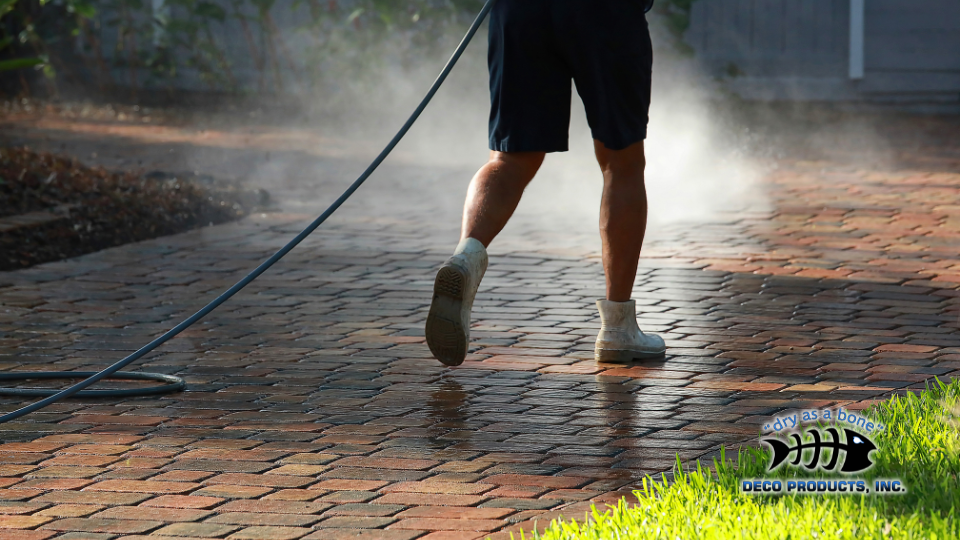
Drying time depends on the weather, humidity, airflow, the type of paver, how much water was used during cleaning, and even how the pavers were installed.
The manufacturer’s recommended drying time is an important guideline, but common sense matters too.
If the pavers still look or feel damp, they probably need more time.
Why Do Pavers Need to Dry Before Sealing?
Pavers are porous, which means they can absorb and hold water.
Even when the surface looks dry, moisture may still be inside the pavers or underneath them. Applying a sealer before the surface has had enough time to dry can create problems.
Depending on the coating and conditions, trapped moisture can contribute to:
- Cloudiness or whitening
- Blushing
- Poor adhesion
- An uneven finish
- Peeling or coating failure
Giving the pavers enough time to dry is one of the simplest ways to help prevent problems after sealing.
So, How Long Should Pavers Dry?
There is no single answer that works for every job.
A hot, dry day with good airflow is very different from a humid summer day with little breeze. Pavers sitting in direct sunlight may dry differently than pavers around a shaded pool deck.
When deciding whether the pavers are ready, consider:
- Temperature
- Humidity
- Airflow
- Shade versus direct sunlight
- Recent rain
- How heavily the surface was washed
- The type and thickness of the pavers
- How the pavers were installed
Always follow the drying recommendations for the specific product you are using. But remember, recommended times are based on certain conditions. Your jobsite may be different.
If you’re unsure whether the pavers are dry enough, giving them more time is usually the better choice.
Humidity Can Mean More Drying Time
Humidity plays a big role in how quickly pavers dry.
When there is already a lot of moisture in the air, water evaporates more slowly. This is especially important for contractors working in Florida, along the Gulf Coast, and in other humid climates.
A surface that dries quickly on one job may take much longer on another.
This is where common sense becomes important.
If the surface still looks damp, feels damp, or conditions have been extremely humid, give it more time.
Don’t seal simply because the clock says you should be able to.
How the Pavers Were Installed Matters Too
There is another source of moisture contractors sometimes overlook: what is underneath the pavers.
Some pavers are installed with thin-set or mortar over a concrete slab. Unlike a traditional paver base that allows water to drain through the system, the concrete underneath can limit drainage.
Water from rain, irrigation, pool use, or pressure cleaning can enter the pavers and joints. If it can’t easily drain downward, that moisture eventually needs another way to escape.
This doesn’t change the importance of allowing the pavers to dry properly before sealing. It makes choosing the right coating even more important.
A breathable coating allows water vapor to escape through the sealed surface rather than trapping that vapor underneath.
That’s an important reason Deco Products offers breathable coating solutions. Proper drying before application and breathability after application work together to help manage moisture and protect the finished surface.
What If the Sealer Is Still Tacky?
Drying time doesn’t stop being important once the sealer is applied.
If the coating is still tacky after the expected dry time, it may simply need more time.
High humidity, cooler temperatures, shade, poor airflow, or applying the product too heavily can slow down drying and curing.
If the product is still tacky, don’t automatically assume something is wrong.
And don’t put furniture, rugs, vehicles, or heavy foot traffic back onto the surface just because a certain number of hours have passed.
If it’s still tacky, it’s not ready. Give it more time to dry.
Always refer to the product instructions and technical information if the coating remains tacky longer than expected.
Dry to the Touch Doesn’t Always Mean Fully Cured
Drying and curing are not the same thing.
A sealer can feel dry to the touch before it has reached its full cure.
Think about painting a wall. You may be able to touch the paint without getting it on your hand, but that doesn’t mean you should immediately scrub the wall.
Paver coatings are similar.
Follow the product instructions before allowing foot traffic, replacing furniture, laying down rugs, or driving vehicles onto the newly sealed surface.
Watch the Weather—and the Pavers
Before sealing, don’t just look at the temperature on your weather app.
Look at the whole job.
Did it rain yesterday? Was the area heavily pressure washed? Has it been extremely humid? Is the area shaded most of the day? Are there darker areas that may still contain moisture? Are the pavers installed over concrete?
All of these things can affect how quickly moisture leaves the surface.
When in Doubt, Give It More Time
The biggest takeaway is simple:
Drying time is a guideline, not just a number on a clock.
Follow the manufacturer’s instructions, understand the product you’re applying, pay attention to weather conditions, and most importantly, look at the surface in front of you.
If the pavers still seem damp, wait.
If conditions are extremely humid, expect drying to take longer.
If the coating is still tacky, give it more time before opening the area to traffic.
And when moisture may be an ongoing concern because of how the pavers were installed, choosing a breathable coating can allow water vapor to escape after the job is complete.
At Deco Products, our breathable paver sealing solutions are designed with real-world conditions in mind. Because a successful sealing job isn’t just about applying a great product.
It’s about applying the right product, to a properly prepared surface, at the right time.