Deco Products, Inc. has been manufacturing high-performance waterproofing and dampproofing coatings since 1991. One of the most common questions we hear is:
What is the difference between waterproofing and dampproofing?
While the terms are sometimes used interchangeably, waterproofing and dampproofing provide two different levels of foundation protection. Choosing the right system begins with understanding the water and soil conditions surrounding the structure.
For new construction, that decision should be made during foundation planning, before the coating is applied and the wall is backfilled.
Who Determines the Site and Water Conditions?
Before deciding between dampproofing and waterproofing, it is important to understand the conditions surrounding the foundation.
Soil and site testing, typically performed by a geotechnical or soils engineer, can help identify groundwater levels, soil characteristics, drainage conditions, and other factors that may affect a below-grade foundation.
Architects and structural or civil engineers use this information, along with applicable building-code requirements, when designing and specifying the foundation protection system. The local building department reviews the construction documents and enforces the locally adopted building code.
In other words, the decision shouldn’t be a guess. It should be based on the conditions of the project.
What Separates Dampproofing from Waterproofing?
The simplest way to understand the difference is:
Dampproofing = Moisture Control
Waterproofing = Water Control
Dampproofing: Moisture Control
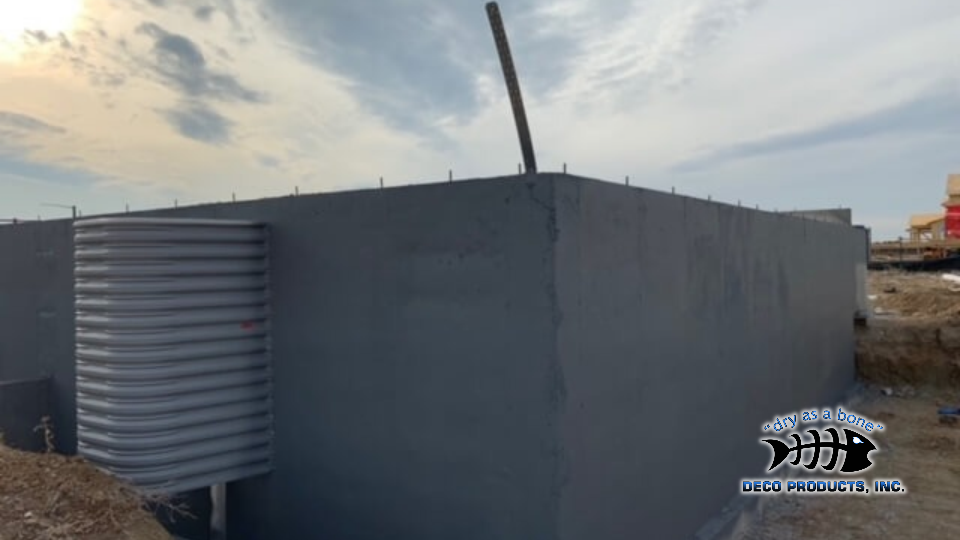
Dampproofing is designed to protect below-grade foundation walls from normal moisture in the surrounding soil.
Its primary purpose is to reduce the movement of ground moisture through the foundation wall and help keep basement and below-grade spaces dry.
Think of dampproofing as protection against normal ground moisture.
When site conditions indicate that hydrostatic pressure is not expected, an appropriately specified dampproofing system may provide the level of protection the project requires.
Waterproofing: Water Control
Waterproofing provides a higher level of protection and is intended for foundations exposed to more severe water conditions, such as a high water table or severe soil-water conditions.
Water accumulating against a foundation wall can create hydrostatic pressure. That pressure can force water through cracks and pores in concrete.
Think of waterproofing as protection against water, not simply moisture.
For new foundations, a quality waterproofing material may also need to provide important performance characteristics depending on the system and project requirements, including:
Crack Bridging: Concrete naturally shrinks and can develop cracks. Waterproofing materials may need enough flexibility to span minor cracking while maintaining protection.
Low-Temperature Flexibility: In colder climates, waterproofing materials must remain flexible and durable through temperature fluctuations.
Water Resistance: Waterproofing is designed to protect the foundation against water intrusion under the conditions for which the system is specified.
Strong Adhesion: The coating must remain properly bonded to the substrate to provide long-term performance.
Industry Standards and Building Requirements Matter
Selecting a dampproofing or waterproofing system isn’t simply about choosing a product off the shelf.
Product performance, project specifications, applicable ASTM testing, building-code requirements, and third-party evaluations may all play a role in determining whether a product is appropriate for a particular application.
Builders, architects, engineers, and contractors should always review the requirements applicable to their individual project, along with the selected product’s technical data and application instructions.
Proper Drainage Is Part of the System
Neither dampproofing nor waterproofing should be viewed in isolation.
Drainage design plays an important role in managing water around a below-grade foundation. Depending on the project, perimeter drainage may be used to collect and redirect water away from the structure and help reduce water buildup around foundation walls.
For new construction, the foundation coating and drainage system should be planned together as part of the overall design.
The Difference Is Simple
DAMPPROOFING
Normal Ground Moisture Without Hydrostatic Pressure = Moisture Control
WATERPROOFING
High Water Table or Severe Soil-Water Conditions = Water Control
That distinction makes it easier to understand the purpose of each system. But determining which one belongs on a particular project requires understanding the actual conditions surrounding the foundation.
Deco Products: Foundation Protection Since 1991
At Deco Products, we manufacture high-performance coatings designed to help protect new foundations while providing contractors, builders, architects, and other professionals with technical support when they need it.
Deco 20 Dampproof is designed for foundation moisture control, while Deco 20 Seal is designed for waterproofing applications where hydrostatic pressure may be present.
Our systems are designed with performance characteristics that can include mold resistance, strong adhesion, flexibility, and UV resistance.
Unlike some traditional asphalt-based coatings that must terminate below grade because of UV exposure, select Deco Products systems can provide protection through and above the grade line when installed according to product specifications.
That can help create a more complete foundation protection system while giving professionals additional flexibility in the field.
Don’t Guess. Protect the Foundation for the Conditions.
The proper foundation protection system should be selected based on site conditions, groundwater conditions, project specifications, drainage design, and applicable building-code requirements.
Dampproofing and waterproofing aren’t interchangeable, and one isn’t automatically the correct choice for every project.
Understanding the conditions first allows the appropriate system to be specified for the protection the structure actually needs.
Before backfill, confirm that the selected system has been applied according to the product instructions and that its drying and curing requirements have been met.
Not sure which Deco Products solution is appropriate for your new foundation?
Contact Deco Products to discuss your project conditions, specifications, and application requirements with our team.