
How To Fix Blotchy Concrete Sealer: Troubleshooting Common Sealer Problems
A concrete surface that exhibits visible discolored patches or variations in light and dark tones after sealing can be unattractive. Fortunately, this issue is fixable. Learn from the experts at Deco Products about the reasons why blotchy concrete happens, and the steps you can take to fix it.
Why Concrete Sealer Becomes Blotchy
Concrete sealer blotchiness can occur when insufficient sealer is applied to the concrete surface. A good rule of thumb to avoid this particular issue is to remember that the amount of sealer required depends on whether the concrete has a rough or smooth surface. Different surface textures have varying absorption rates that will alter the amount of concrete sealer needed.
At a microscopic level, a concrete surface can never be perfectly smooth. There will always be low-lying areas or valleys throughout the surface. However, the smoother the finish, the fewer these minuscule flaws will exist. When insufficient sealer is applied, these low-lying areas do not receive adequate coverage, and the raised areas are not properly protected, resulting in a splotchy appearance on the concrete surface.
Additionally, a concrete surfaces have varying degrees of porosity. Some areas are more likely to absorb water and salts than others. If these areas don’t receive an adequate amount of sealer, the water and salts can bond with the cement, causing the stain to appear more quickly, resulting in a blotchy appearance.
How to Correct Blotchy Sealer
If the blotchy areas don’t appear to be chemically induced stains, such as those caused by water or salts, apply additional light coats of sealer over them to ensure the entire concrete surface is uniformly covered. To remove chemically-induced stains from inadequately sealed portions of a concrete surface, follow these steps:
- Sweep the surface of all dirt and debris.
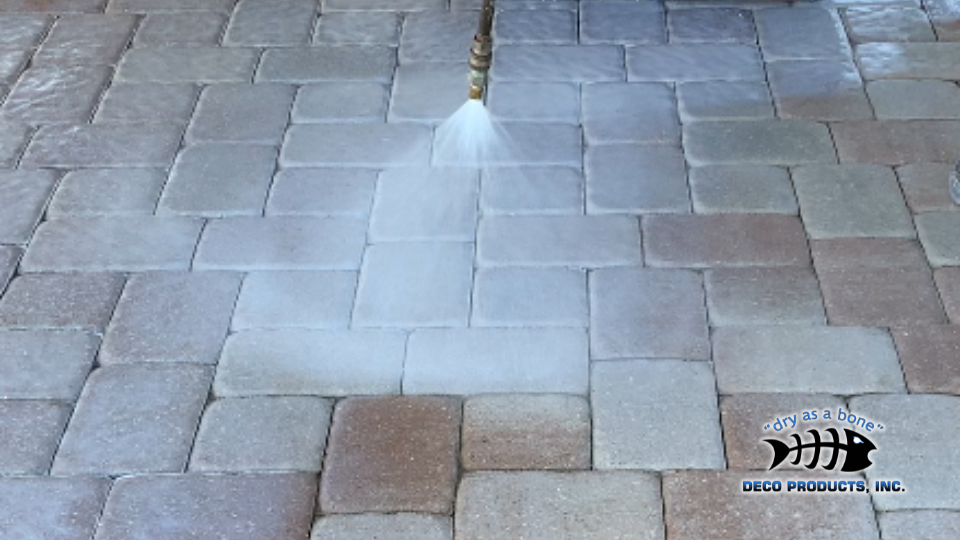
- Clean water stains by pressure washing. Minor surface stains, such as water stains, do not alter the concrete chemically, are usually not permanent, and are easier to clean.
- Clean salt stains. Salts do react chemically with the hydrated lime or calcium hydroxide in concrete and may require a cleaning solution recipe of one cup of vinegar and a squirt of dish soap to every gallon of warm water.
- Clean grease and oil stains with concrete cleaner or degreasers that will eliminate tougher stains.
- After cleaning, make sure the surface is thoroughly dried.
At this point, apply thin coats of sealer to the previously stained areas to better protect them from erosion and staining.
Other Issues that Can Diminish the Appearance of Concrete Sealer
- Cloudy Concrete Sealer: When a sealer appears cloudy, it means that the sealer may not have adhered properly, possibly due to being applied to a dirty, stained, or wet surface. In this case, the sealer can be chemically stripped from the affected areas and reapplied. Before reapplying more sealer, clean and dry the area thoroughly, then apply the sealer in thin, even coats.
- Sticky or tacky concrete sealer: Concrete sealer that remains sticky or tacky is another common concern experienced by applicators. Sticky concrete sealer can indicate that the sealer didn’t have a chance to cure properly, either because too much sealer was applied or it was applied in a low-temperature or high-humidity environment. There are solvents available that can reactivate the sealer and aid in its curing process. However, if this doesn’t work, the sealer will have to be stripped and reapplied. Just make sure not to reapply the sealer under the same conditions.
Quality Concrete Sealer Made in the USA
Applicators in the United States, and now Canada, rely on us for both quality concrete sealer products and the expertise to apply them for optimal results. For effective and efficient concrete sealing, utilize our industry-leading sealants. Contact us to learn more about our multi-purpose products and how to apply them when preparing for your next concrete sealing project.